

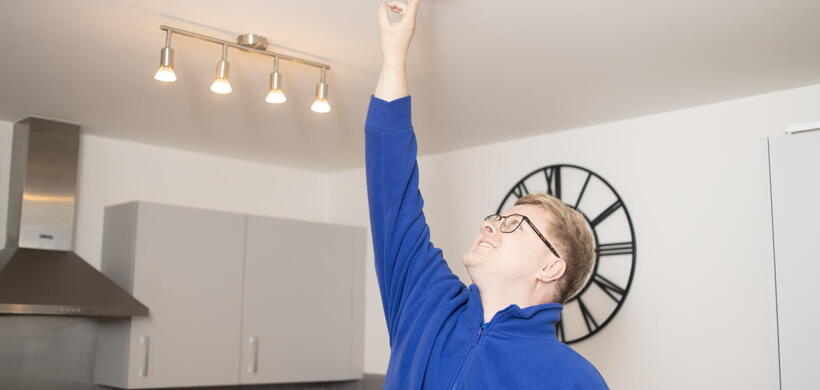
Most of our properties are fitted with Aico 3000 series Smoke, Heat and Carbon Monoxide (CO) detectors, along with Aico 200 series battery powered CO detectors. These alarms are designed to provide early warning and help keep you and your household safe.
This guide explains how to identify alarm indicators, how to test and maintain your alarms, and what to do if a fault occurs.
Understanding your alarm indicators
Each alarm is fitted with visual LED indicators to show its status:
- Green LED – Indicates power supply
- Yellow LED – Indicates a fault
- Red LED – Indicates memory, pre-alarm, or alarm activation (if coinciding with alarm sounding)
If you notice flashing lights, refer to the fault information below.
Your alarm is beeping. Is the battery low?
If the backup battery is depleted, the alarm will emit:
- One short chirp every 48 seconds
- One yellow LED flash every 48 seconds
What to check:
- Ensure the green LED is on continuously
- If the green LED is off or flashing every 48 seconds, the alarm is running on battery power due to a mains supply issue
The battery is not replaceable. Check fuses, circuit breakers, and wiring to restore mains power. If you are unsure, contact a qualified electrician.
Once mains power is restored, the chirping should stop within 2 hours.
If chirping continues after this time, the alarm may be faulty and will require repair or replacement.
Your alarm is beeping. Is there a sensor fault?
If the alarm detects a fault with its sensors (smoke, heat, or CO), it will:
- Emit two short chirps every 48 seconds
- Show two yellow LED flashes every 48 seconds
In this situation, the alarm must be returned for repair or replacement, as it is no longer operating correctly.
Testing and maintaining your alarm
Regular testing is essential to ensure your alarms are working correctly. You should test all alarms:
- After the system is first installed
- Once every month
- After a prolonged absence (for example, returning from a holiday)
- After any electrical work, repairs, or servicing within the property
Inspecting and testing procedure
Follow these steps when testing your alarms:
1. Power check
Ensure the green LED power indicator is on continuously, confirming the alarm is receiving mains power.
2. Fault check
Check that no green, yellow, or red LEDs are flashing. Flashing lights indicate a fault or alarm condition.
3. Sound test
Press and hold the test/hush button for up to 10 seconds until the alarm sounds.
On Ei3028 and Ei3030 models:
- First press sounds the fire alarm tone
- Second press sounds the CO alarm tone
This test confirms the sensor, electronics, and sounder are all working correctly. The alarm will stop when the button is released.
4. Interconnected alarms (if installed)
If your alarms are interconnected:
- Press and hold the test button on one alarm for 10 seconds
- All alarms should sound within 10 seconds
- When released, the alarm you tested will stop immediately
- Other alarms will continue sounding for 3–4 seconds
This confirms that the interconnection is working correctly. Repeat this test on each alarm.
5. Battery backup test (mains-powered alarms)
Test the battery backup:
- Turn off mains power at the distribution board
- The green LED should flash once every 48 seconds, showing battery operation
- Press the test button to ensure the alarm sounds loudly
- Monitor the alarm for 3 minutes for any fault chirps or yellow LED flashes
- Restore mains power at the distribution board
Cleaning your alarm
To keep your alarm working effectively, clean it regularly. In dusty environments, more frequent cleaning may be required.
- Use a vacuum cleaner with a narrow nozzle attachment to remove dust, insects, and cobwebs from vents
- Wipe the exterior with a slightly damp cloth, then dry thoroughly with a lint-free cloth
Do not use:
- Cleaning agents, detergents, bleaches, or polishes
- Aerosol sprays
- Do not paint your alarm, as this can prevent it from working correctly.
Keeping your home safe
Regular testing, cleaning, and awareness of alarm indicators will help ensure your smoke, heat, and carbon monoxide detectors continue to protect you and your household. If you are ever unsure about an alarm’s operation or believe it may be faulty, report it as soon as possible.
Your safety is our priority.